Curriculum

By the time students leave Thorns, we aim to develop them as confident, literate adults who can read, write, speak and listen with confidence.
At Thorns Collegiate Academy, we believe that literacy is the foundation of lifelong learning and personal empowerment. Literacy underpins all areas of the curriculum and is designed to nurture confident, articulate, and literate individuals who are equipped to thrive in both academic and real-world settings. We believe that every member of staff is teacher of Literacy and aim to foster a culture where literacy is prioritised in every classroom, in every subject.
We focus on four key strands of literacy:
- Reading – Developing comprehension, fluency, and a love for literature across a wide range of texts.
- Writing – Encouraging clarity, creativity, and accuracy in written communication for a variety of purposes and audiences.
- Speaking – Building confidence in verbal expression and being able to articulate ideas clearly.
- Listening – Developing active listening, critical thinking, and respectful engagement with others.
By strengthening these core skills, we aim to support every student in becoming a capable communicator and thoughtful learner. Literacy is not just a subject—it’s a vital life skill. Through high-quality teaching and a literacy rich environment, we empower our students to become confident, literate adults ready to make their mark on the world.
Reading at Thorns
KS3
At Thorns, our Literacy 4 Life curriculum in Years 7 and 8 offers a rich, engaging, and inclusive approach to developing essential literacy skills. Through a carefully designed thematic curriculum, students are given meaningful opportunities to strengthen their reading, writing, speaking and listening across all subjects.
Our unique approach to Big Reads and Big Writes provides a scaffolded learning experience that enables all students to access and engage with key texts and genres. These sessions are
carefully planned to support comprehension, creativity, and critical thinking, while also encouraging students to express themselves with clarity and confidence.
A strong emphasis is placed on vocabulary development. In every lesson, students encounter and explore Tier 2 and Tier 3 vocabulary, helping them to build a deeper understanding of subject-specific language.
Theme Reader
In addition to classroom learning, students in Years 7, 8 and 9 complete a Theme Reader as part of their homework for each L4L theme. This task involves reading a set text tailored to the theme and recording their progress. These texts are chosen to challenge students and expose them to rich, subject-relevant vocabulary. The Theme Reader also ensures that every student has the opportunity to be heard reading aloud during each theme, supporting fluency, confidence, and progress throughout the year.
Reading opportunities for all
We believe that reading opens doors—for learning, for imagination, and for life. That’s why every student at Thorns has weekly access to our library, where they can explore a wide range of books and discover new favourites. In addition, students can enjoy reading anytime, anywhere through our Sparx Reader platform, which offers a fantastic selection of e-books.
Our English curriculum is carefully designed to support students from Year 7 through to Year 11, building on what they’ve learned each year. It’s scaffolded to help them grow in confidence and develop the skills they need to succeed at every stage of their journey—whether that’s analysing texts, writing creatively, or preparing for exams and beyond.
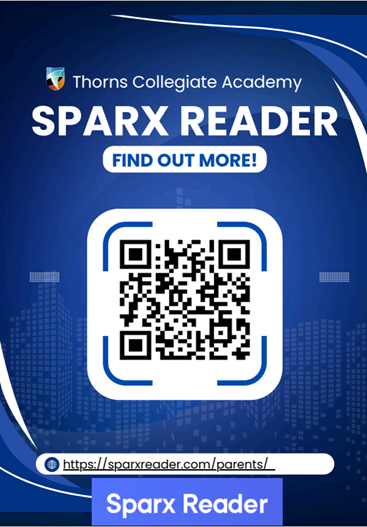
Sparx Reader
At Thorns, we are committed to nurturing a lifelong love of reading and developing strong Literacy skills across all year groups. As part of this commitment, students in Years 7 and 8 participate in the Sparx Reader programme — a dynamic and personalised reading platform designed to engage learners at their individual reading level.
Sparx Reader offers each student a tailored reading experience by recommending texts that align with their current ability and personal interests. This approach not only builds reading confidence but also encourages enjoyment and curiosity, helping students to see reading as a rewarding and enriching activity.
Students access Sparx Reader during their daily L4L sessions, where they work towards achieving a weekly target of at least 300 Sparx Reader Points. These points are awarded for ‘careful reading’, which involves engaging with a text and completing regular checkpoints that assess comprehension and understanding. The programme adapts in real time to each student’s responses, offering personalised support and challenge based on their accuracy and progress.
This reflective reading process encourages students to think deeply about what they have read, enhancing their ability to interpret and analyse texts. Teachers actively monitor progress during L4L sessions, providing targeted support and guidance to ensure every student is developing both fluency and comprehension.
The Sparx Reader programme complements our wider L4L curriculum, reinforcing the importance of reading. By embedding reading into the daily routine, we ensure that every student has the opportunity to grow as a confident, capable, and enthusiastic reader.
Sparx Reader is an inclusive platform, allowing students to personalise their experience by changing font, font size, spacing, background colour and adding a line or guide, supporting a range of different learning needs.
We now also have access to Sparx GCSE, so will be introducing Sparx Reader to our KS4 students very soon!
Whole class reader
We are passionate about developing confident, thoughtful readers who can engage with a wide range of texts and ideas. As part of this commitment, all students in Years 7 to 11 take part in our Whole Class Reader curriculum — a structured reading programme delivered during form time.
The texts selected for this programme are chosen with great care. Each one is selected for its thematic relevance to our L4L, English, or Personal Development curriculum, its broader cultural significance, or its potential to enrich students’ cultural capital. By engaging with these texts, students are exposed to diverse perspectives, powerful narratives, and thought-provoking ideas that support both academic and personal growth.
Each week, staff read aloud to students, modelling fluent and expressive reading. Students follow along using their own copy of the text, allowing them to engage actively with the material. After reading key sections, teachers facilitate discussions using targeted questions designed to:
- Expand vocabulary
- Deepen understanding of the writer’s purpose
- Encourage personal and critical responses to the text
This shared reading experience helps to build a strong reading culture across the academy, where students feel confident discussing literature and exploring complex themes.
Whole Class Reader - Key Texts
Throughout the academic year, each year group will study two core texts alongside a selection of short non-fiction pieces. Our current reading list includes:
- Year 7 – Holes by Louis Sachar
- Year 8 – The Outsides by S.E. Hinton
- Year 9 – Noughts and Crosses by Malorie Blackman
- Year 10 – Animal Farm by George Orwell
- Year 11 – The Hate U Give by Angie Thomas
Later in the year, we look forward to introducing additional texts such Wonder, Hunger Games, Curious Incident of the Dog in the Night-time, Pigeon English, and Of Mice and Men, continuing to challenge and inspire our students through literature.
Reading VIPERS
Reading VIPERS are used in all of our Whole Class Reader sessions and are also incorporated into ‘Big Read’ lessons in L4L, keeping a consistent approach to comprehension across all year groups.

Oracy
We believe that confident communication is a cornerstone of success — both in education and in life beyond the classroom. As part of our mission to develop articulate, thoughtful, and literate young adults, we have embedded Oracy into our weekly form time sessions.
Each week, all students take part in a dedicated ‘Oracy – Time to Talk’ session. These sessions are designed to strengthen students’ speaking and listening skills, enabling them to express their thoughts clearly, listen actively, and engage respectfully in discussion. Through structured activities and guided conversations, students learn how to communicate effectively in a range of contexts. During these sessions, students will be asked a ‘Big Question’ and think, pair, share will then be used to develop critical thinking skills. Sentence talking stems will also be provided to structure responses.
Our Oracy curriculum is built around four key strands:
- Physical – focusing on voice projection, clarity, and body language
- Linguistic – developing vocabulary, grammar, and rhetorical techniques
- Cognitive – encouraging reasoning, structuring ideas, and critical thinking
- Social & Emotional – promoting empathy, confidence, and collaborative dialogue
Each strand is explored in depth, helping students to understand how different aspects of communication influence the way we present ourselves and interact with others. These sessions provide a safe and supportive environment for students to practise and refine their communication skills.
We are following the Voice 21 Oracy Framework, a nationally recognised model that underpins our approach. This framework ensures that our Oracy provision is both rigorous and inclusive, giving every student the opportunity to become a confident speaker and an active listener.
By embedding Oracy into our form time, we are not only enhancing students’ academic development but also equipping them with essential life skills that will serve them well in future education, employment, and personal relationships.
Literacy Intervention
KS3 Phonics
We know that getting the foundations of reading right is essential in helping students become confident, successful readers. That’s why some students in Year 7 and Year 8 receive additional support through Little Wandle: The Code, a specialist phonics intervention designed for secondary-aged learners who need further support with decoding and fluency.
Students are identified through a combination of reading assessments, including baseline reading data, Single Word Reading Tests, screening assessments and professional judgement. We also consider information from primary schools, transition data, SATs outcomes and recommendations from external agencies to ensure that support is accurately targeted.
Little Wandle: The Code begins with a whole-cohort screening process and detailed diagnostic assessment, allowing us to identify each student’s specific areas of need. Students are then placed onto the most appropriate intervention pathway, ensuring that teaching is personalised and focused on the skills they need to develop.
The programme provides structured phonics teaching alongside age-appropriate decodable texts that are carefully matched to students’ current reading knowledge.
Regular assessment checkpoints enable us to track progress closely and respond quickly to individual needs.
By using Little Wandle: The Code, we aim to build reading accuracy, fluency, confidence and independence, ensuring that every student is equipped with the literacy skills needed to access the curriculum, enjoy reading and thrive both in school and beyond.
Lexia
We understand that every student learns differently—and we’re here to support them every step of the way. For students who’ve been identified through NGRT baseline assessments, SATS results, transition information from primary schools and from recommendations from External Agencies, but don’t need Phonics intervention, or in addition to the Phonics intervention, we offer the Lexia programme as part of our literacy support.
Lexia helps students build confidence in key areas like word study, grammar, and reading comprehension. What makes it special is its ability to adapt to each student’s needs, creating a personalised learning path that grows with them. Whether it’s strengthening vocabulary or improving understanding, Lexia gives students the tools to succeed.
This programme is just one of the ways we make sure every learner at Thorns gets the right support at the right time, helping them thrive in their reading journey and beyond.
GCSE Support
We also provide after school intervention sessions tailored to small groups, closely linked to specific GCSE texts and skills.
We are developing our use of Sparx Reader to support with GCSE set texts too.
Precision Teaching
Precision teaching is a structured teaching method that is designed to support the needs of a child experiencing difficulty with acquiring or maintaining a specific skill. At Thorns, Precision Teaching is typically used to improve the accuracy and fluency of reading and spelling. Precision teaching is often used with children with SEND who have received a dyslexia diagnosis or on the dyslexia pathway who might need additional support. Precision teaching is designed to get students to think quickly until they are able to recall the words almost instinctively. This form of structured teaching intervention is fast-paced and repetitive, and students are timed as to how may words they can read or spell in one minute. Students will learn to read or spell words until they become fluent and confident before moving on to a new focus word/set of words.
Reading Ambassadors
Our Reading Ambassadors work with staff to promote a love of reading at Thorns. Their passion for reading and dedication to promoting a love of books across our school community truly shone through in their applications, making them truly deserving of their roles.
Our ambassadors are working closely with Miss Brown to bring exciting reading opportunities to life. From helping to run the L4L Library and recommending great reads, to planning events and supporting reading initiatives, they’re playing a key role in making reading fun, inclusive, and accessible for everyone. Look out for a range of reviews coming from them soon!
We’ve got lots of exciting plans ahead — and our ambassadors are full of ideas!
Peer Reader
Our Peer Reading Programme provides Year 7 students with the opportunity to read regularly with trained Reading Ambassadors from older year groups.
These sessions help students to develop reading fluency, confidence and vocabulary in a supportive and encouraging environment.
As well as improving reading skills, the programme promotes positive relationships across year groups, helping students build confidence, enjoy reading and develop a lifelong reading habit. Through shared reading, discussion and encouragement, students are supported to become more confident, engaged and independent readers.
The Library
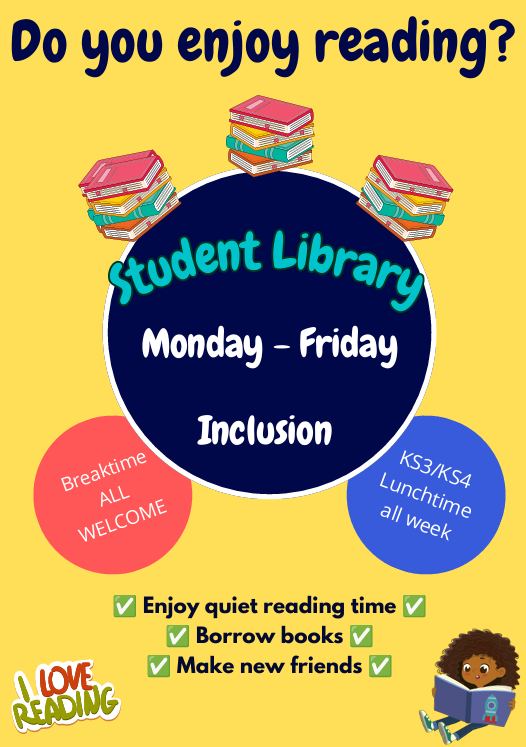
The Library is a welcoming space located in Inclusion and is open daily for students to enjoy reading, study quietly, or borrow books to take home.
New for this year, the Library has been redesigned to create an inviting environment that promotes reading for pleasure and supports our whole-school literacy vision.
The Library is run by our Literacy Coach, supported by Reading Ambassadors and Prefects, who help students discover new books, recommend titles and promote a love of reading across the school.
Whether students enjoy fantasy, mystery, graphic novels, non-fiction or contemporary fiction, there is a wide range of books available to suit all interests and reading levels. Students can visit independently, read with friends, discuss books, or simply enjoy a quiet space.
At Thorns, we believe that reading should be enjoyable, inspiring and accessible to everyone. The Library plays a key role in developing a culture of reading for pleasure and helping all students grow into confident, literate adults.
Reading at Home
Reading at home is one of the most powerful ways to support your child’s learning—and it doesn’t have to be complicated. We encourage families to make reading part of everyday life, helping students build confidence, vocabulary, and a love of stories and ideas. This doesn’t mean they have to read books! Reading is everywhere!
Here are some simple ways to support reading at home:
- Encourage regular reading time: Just 15–20 minutes a day can make a big difference. Whether it’s a novel, magazine, newspaper, or e-book on Sparx Reader, consistency is key.
- Talk about what they’re reading: Ask questions like “What’s happening in the story?” or “What do you think of that character?” This helps with comprehension and critical thinking.
- Let them choose: Giving students the freedom to pick what they read—fiction, non-fiction, graphic novels, or articles—can boost motivation and enjoyment.
- Model reading: When young people see adults reading, it reinforces that reading is valuable and enjoyable.
- Use Sparx Reader: Our e-book platform is available to all students and offers a wide range of engaging texts they can access anytime.
Reading at home doesn’t need to feel like homework—it’s about creating space for curiosity, imagination, and growth. If you’d like recommendations or support, get in touch!
Tues-Key
Expanding Vocabulary, One Word at a Time
We know that a strong vocabulary is one of the most powerful tools a student can have. It supports reading, writing, speaking, listening and success across every subject.
Every Tuesday, students take part in Tues-Key, our whole-school vocabulary programme designed to introduce and explore a new word each week.
These words may be linked to curriculum subjects, current events, protected characteristics, personal development themes or the weekly oracy discussion.
Students don’t just learn definitions. They are encouraged to:
- Define it – understand the meaning of the word in student-friendly language.
- Use it – apply the word accurately in speech and sentences.
- Connect it – explore synonyms, antonyms and related vocabulary.
- Explore it – investigate the word’s origins, different meanings and wider links.
Through regular discussion and retrieval, students build their academic vocabulary and develop confidence using ambitious language in both their spoken and written communication.